STEM, the acronym for Science Technology Engineering and Math, came into common usage in the early 2000s fueled in part by a 1983 report called “A Nation at Risk” that highlighted the need for educational reform with increased emphasis on STEM subjects. I don’t think you can blame it on the Russians—and Sputnik in particular—but falling behind “the evil empire” in science was a motivating factor.
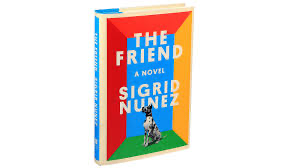
Today’s Op-Ed in the New York Times, entitled “Attention, Men: Books are Sexy” by Maureen Dowd, is just one of several recent articles lamenting the decline of literacy and literary fiction in current culture. David Brooks offered his assessment, “When Novels Mattered” in the same paper on July 10th, blaming the internet for its decline.
As a Liberal Arts graduate who made his way in the world flying the best engineered fighter and commercial aircraft I don’t know what to say about where the emphasis in education should land. I was a systems operator. I didn’t need to know how to fix a mechanical problem at Mach 2, but I did need to understand its source and what to do about it. Maybe balance is the key.
When I see American men falling behind women educationally and buying into the “warrior” masculinity promoted by Pete Hegseth, the cocksure wrong-headed opinions of Joe Rogan and the complete and utter ignorance of Donald Trump I know the educational system is failing not only men but American society as a whole. And it’s happening at lightening speed. According to an article by David Morris in December 2024, about half the authors on the New York Times fiction best-seller list in 2004 were men. This year the ratio is one-quarter men to three quarters women, with women accounting for 80 percent of fiction sales. I agree with Mr. Morris that “the decline and fall of literary men should worry you.”
Parents in the not too distant past wanted their children to be “well-rounded” by which they meant educated to think critically, and that meant versed in both science and the humanities. If I were emperor of the world I would mandate a liberal arts education for university undergraduates before moving forward with graduate studies in either science or the humanities. If it was good enough for Plato and Aristotle, Leonardo and Spinoza, it should work for your grandkids and mine.
There’s so much to learn from reading fiction at a time when technology, particularly AI, is dominating the news. Mary Shelley’s novel Frankenstein might be a case in point. Victor Frankenstein is a young scientist who creates a monster in a secret scientific experiment. According to Dr. Sabrina Starnaman, clinical assistant professor in the School of Arts and Humanities at the University of Texas, who teaches a class about the book, Frankenstein offers a thought-provoking look at science and ethics.
“Victor Frankenstein had this great idea that his creation would thank him and would honor him and would be glorious. And when his creature came to life, he found it grotesque and monstrous and terrifying,” she said. “Mary Shelley was not just exploring the technological questions, but also the human questions.”

Frankenstein is a cautionary tale. But the reason to read fiction is more than finding a useful tool to deal with technology. It expands horizons, encourages creative thinking and emotional intelligence—all of which can be applied in our “activities of daily living.” And…it’s pleasurable and adds balance to our otherwise stressful contemporary lives.
Live it up. Read a book. Get lost in it. “Don’t think too much. It’s bad for the ball club.”